


SkyCandy - Sunset Forecast App
3.2137.00 Reviews
App Specs
- Version
- 2.8.0
- Updated On
- License
- Free
- Downloads
- 10,000+
- Developer
- Dunbar Technology, LLC
- Categories
- Weather
- Platform
- Android
Screenshots
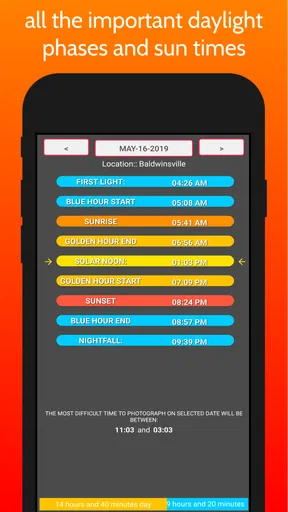
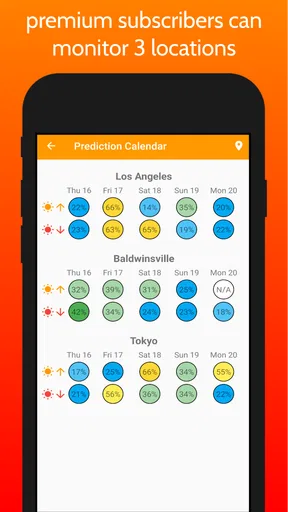
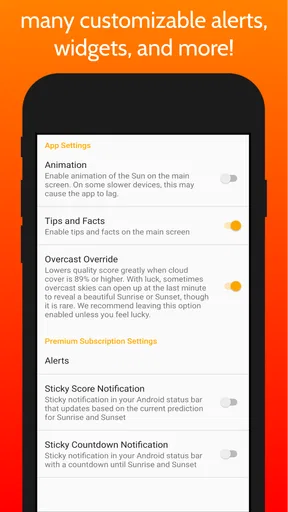
 Analysis by AppCompare
I approached SkyCandy as someone who wanted a better answer to a simple question: will the sky be worth watching later? Most weather apps are built around temperature, rain, wind, and alerts. This app takes a narrower, more visual approach, focusing on sunrise and sunset forecasts for people who enjoy vivid, colorful skies. That difference is important. It is not the kind of weather tool I would use as my only source for planning a full day outdoors, but it can add a useful layer of anticipation when the light matters as much as the forecast.
The app comes from Dunbar Technology, LLC, and is available as a free weather app for everyone. It has reached over ten thousand installs, with an average rating of 3.2 from around five hundred ratings and more than one hundred written reviews. Those figures suggest a mixed experience rather than universal enthusiasm, and that matches my impression: the idea is appealing and easy to understand, while the usefulness depends heavily on how often you actually care about sunrise or sunset conditions.
Getting from installation to a useful sky forecast
I start by treating SkyCandy as a focused forecast rather than a complete weather setup: I choose a familiar viewing area, then check whether the sunrise or sunset outlook gives me a reason to plan around the light. That first comparison helps me judge whether its specialized guidance fits my routine before I consider adding more locations or changing how I plan outings.
What the app is really for
The first thing to understand is that SkyCandy is not simply another replacement for a standard weather app. Its purpose is more specific: help you decide whether it may be worth stepping outside for a colorful sunrise or sunset. That makes it interesting for photographers, walkers, runners, travelers, beach visitors, campers, and anyone who enjoys watching the changing light.
I would describe it as a decision aid rather than a complete forecast center. A normal weather service might tell you that the evening will be partly cloudy, while SkyCandy is aimed at the more human question: could those clouds make the sunset more interesting? That narrower focus is its main strength, but also its first limitation. If you need detailed precipitation timing, severe-weather information, hourly wind, or a broad view of tomorrow’s conditions, you will still want a conventional weather app beside it.
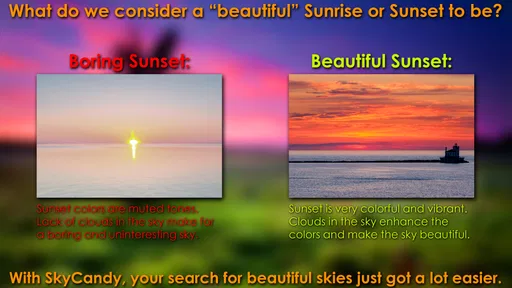
The store summary presents the app as a way to find vivid and colorful skies. In practice, that promise sets the right expectation only if you treat the forecast as guidance, not a guarantee. Sky color depends on changing cloud cover, visibility, haze, location, and timing. Even a promising forecast can produce an ordinary-looking horizon, while an unremarkable prediction can occasionally surprise you. I found the app most useful when it helped me decide whether an outing was worth the effort, not when I expected it to predict a perfect photograph.
The first setup should be kept simple
After installing it, I would begin with the smallest possible setup: choose the place where you expect to watch the sky and then explore the sunrise or sunset view before changing anything else. A first-time user can easily become distracted by the idea of planning several locations, but the fastest route to understanding the app is to test it against a familiar horizon.
Worth Reading Before You Choose

Flipboard Shows What News Apps Must Do Beyond the Feed

Switching to Android Auto Means Rethinking Your Driving Routine

Google Calendar Makes a Crowded Week Easier to Manage

Ludo King Makes the Most of the Minutes Between Plans

Baby Panda World Brings Quick Play to Modern Phones, but Its Game Library Feels Busy

ESPN’s Live Game View Makes Following Close Games Easier
Use your home area first, even if it is not especially scenic. That gives you a practical reference point. You can see whether the forecast feels useful for the view from a balcony, a nearby park, or a regular evening walk. Once the basic idea makes sense, then it becomes worthwhile to consider a beach, hill, lake, or travel destination.
One detail that matters more than it might seem is location accuracy. A sunset forecast for a city center may not represent what you see from an exposed coastline or a higher viewpoint a short distance away. Buildings, hills, and local haze can change the experience even when the broader weather pattern is similar. For that reason, I would select the location closest to the actual viewing spot rather than automatically accepting a broad nearby place.
The app is free to start, which makes this trial easy for casual users. It also includes in-app purchase options ranging from $0.99 to $99.99 per item. I would not assume that paying is necessary before understanding the free experience. First decide whether the basic forecast changes your behavior in a useful way. If you rarely go out specifically for sunrise or sunset, purchasing anything would be difficult to justify.
Your first meaningful success
The first successful action is not merely opening the app. It is using a forecast to make a real decision. Pick an upcoming sunrise or sunset, check the outlook, and compare it with what you can actually see from a familiar location. If the forecast looks promising, prepare a simple plan: choose your viewing spot, allow enough time to arrive, and remember that the most interesting light may appear before sunrise or after the sun has technically set.
This is where the app can become more than a novelty. Suppose I have an evening free after work and am deciding between going straight home or walking to an open viewpoint. A conventional weather app might show comfortable conditions, but that does not tell me whether the sky could be visually rewarding. SkyCandy gives that decision a more focused purpose. I can check the evening outlook, consider the distance, and decide whether the possible result justifies the walk.
For photography, I would use the forecast as a planning signal rather than a command. A favorable indication can help me prepare a camera, clean a lens, or leave earlier. It should not replace looking toward the horizon when I arrive. The best practical workflow is to combine the app’s suggestion with the ordinary weather details from another source, especially if the outing involves a long drive or difficult terrain.
For a casual viewer, the process can be even lighter. Check before dinner, choose a nearby open area, and avoid turning the experience into a complicated project. The app is most enjoyable when it reduces indecision. If it leads you to spend more time comparing screens than looking at the sky, it has stopped serving its purpose.
How I would use it for different routines
Photographers may get the most obvious value from this app, but they should be realistic about what it can and cannot do. The useful insight is not that it replaces a detailed planning workflow; it is that it can act as an early filter. Instead of examining every possible evening, I can use it to identify the few dates that deserve closer attention. I would then verify cloud movement, wind, access, and the direction of the horizon elsewhere.
Runners and walkers can use it in a less demanding way. A colorful-sky forecast can turn a routine outing into a more intentional one, particularly when the route includes an unobstructed view. The trade-off is that a forecast aimed at visual conditions may not tell you everything you need for comfort or safety. I would still check temperature, rain, wind, and local advisories before choosing clothing or a route.
Travelers may find it helpful when building a loose itinerary. If a trip includes several scenic locations, a sunrise or sunset outlook can influence which place receives the early or late visit. However, I would avoid making a nonrefundable excursion depend entirely on the prediction. Weather changes, and the app’s visual promise is inherently probabilistic.
Families can also use it as a small planning tool. A child may be more willing to wake up early or take an evening walk when there is a clear reason to do so. The app gives the activity a sense of occasion without requiring specialized knowledge. Still, the result may be subtle rather than dramatic, so I would present it as “let’s see what the sky does,” not “we are guaranteed an amazing sunset.”
Where first-time users may become confused
The biggest possible confusion is the difference between a forecast for a colorful sky and a forecast for pleasant weather. These are related, but they are not identical. A comfortable, cloudless evening can produce a beautiful view, yet dramatic color often depends on atmospheric conditions that may also bring haze or changing weather. Conversely, thick cloud can block the horizon completely. I would read the app as an estimate of visual potential, not as a general statement that the whole evening will be enjoyable.
Another point to keep in mind is timing. The most attractive light may not occur at the exact moment the sun appears or disappears. If I arrive at the stated sunrise or sunset time and leave immediately, I could miss the softer light around it. For a serious outing, I would arrive early and remain a little longer. This is a practical habit that makes the forecast more useful without requiring any special feature.
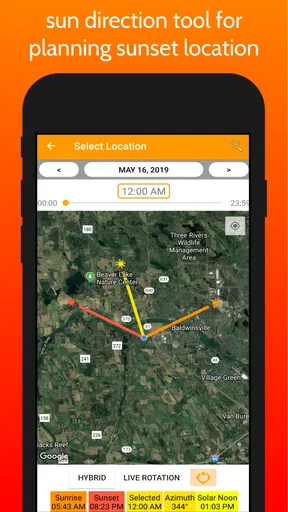
Location can create another misleading result. A forecast may look encouraging, but a row of buildings or a wooded street can hide the horizon. Before blaming the app, I would ask whether the chosen spot actually offers a broad view in the relevant direction. A rooftop, open field, waterfront, or elevated path can make a much larger difference than switching between two similar weather services.
There is also a psychological trap: once an app labels a sunset as promising, it is easy to judge the sky against an imagined spectacular result. I prefer to use the forecast to notice opportunities, not to grade nature. Some of the app’s value comes from encouraging attention, even when the colors are gentle rather than dramatic.
How it compares with ordinary weather apps
A standard weather app remains the better choice for everyday forecasting. It usually serves more needs in one place, including current conditions, hourly changes, rain chances, and warnings. If I am deciding whether to cycle, travel, work outdoors, or pack for a trip, I would start there. SkyCandy is more specialized and therefore more interesting when the visual quality of the sky is the main question.
The comparison is not really about which app is universally better. It is about whether a focused forecast earns a place in your routine. For someone who photographs landscapes, watches sunsets regularly, or plans outdoor moments around natural light, the specialization can be worthwhile. For someone who only wants to know whether to carry an umbrella, the app is probably unnecessary.
I also see a difference in how each type of app encourages behavior. Conventional weather tools help me avoid problems. This one encourages me to look for an opportunity. That is a meaningful distinction. It does not make SkyCandy more accurate by itself, but it gives the information a different purpose and can make a routine forecast feel more connected to an actual plan.
What to do when the forecast disappoints
If the sky does not match the prediction, I would not immediately conclude that the app is useless. Compare the result over several occasions and pay attention to the conditions around your viewing location. A low horizon, nearby lights, haze, or fast-moving cloud can affect what you see. The forecast may also be more valuable as a broad indication of potential than as a precise promise for one particular viewpoint.
That said, repeated disappointment is a fair reason to stop using it. The app is not the right choice if you need dependable, detailed weather information or if you seldom have the flexibility to pause and watch the sky. It is also a poor fit for anyone who expects a colorful result every time. Nature does not work like a content schedule, and a specialized forecast cannot remove that uncertainty.
I would be cautious about spending money until the app has proved useful in my own routine. The free entry point is enough to answer the important personal question: do I actually check sunrise and sunset forecasts, and do they change what I do? If the answer is no, paid options will not solve the underlying problem. If the answer is yes, then the purchase decision should be based on the specific value offered in the version available to you, rather than on the appeal of the concept alone.
My practical recommendation
SkyCandy is best approached as a small companion for sky watchers, not as a full replacement for a weather service. I like the clarity of its purpose: it focuses attention on moments that ordinary forecasts often treat as just another time of day. That makes it easy to recommend to a friend who enjoys photography, scenic walks, or spontaneous outdoor plans.
My advice for a first-time user is straightforward. Install it, set a familiar location, check one sunrise and one sunset, and use the results to make a modest real-world plan. Keep a normal weather app available for rain, wind, temperature, and safety information. Arrive early enough to catch changing light, choose a location with an open horizon, and treat the forecast as an invitation rather than a guarantee.
The app’s current version is 2.8.0, and it supports devices running Android 7.0 or later. Its everyone rating makes it approachable for a broad audience, including families and casual users. Still, the moderate store reception reflects the fact that this is a niche tool: its usefulness rises sharply for people who care about skies and falls just as sharply for people who only need practical weather facts.
In my experience, the strongest reason to try SkyCandy is not that it promises perfect sunsets. It gives me a reason to check, pause, and make time for a natural event I might otherwise miss. Its real value is turning a vague hope for good light into a simple decision about whether to step outside. If that sounds appealing, the free version is an easy place to begin. If your priority is comprehensive forecasting, another weather app should remain your main tool.
Pros
- Beautiful sunset forecasts with clear timing and location details.
- Simple interface makes daily planning quick and effortless.
- Useful notifications help you avoid missing ideal sunset conditions.
- Supports discovering scenic viewing opportunities nearby.
- Lightweight app with a focused
- distraction-free experience.
Cons
- Forecast accuracy may vary with rapidly changing weather conditions.
- Some features or locations may require a paid upgrade.
- Limited usefulness in areas with frequent cloud cover or rain.
- Sunset times depend on location permissions and accurate device settings.
- The app may offer less value for users who rarely watch sunsets.
FAQs for SkyCandy - Sunset Forecast App
What is SkyCandy – Sunset Forecast App?
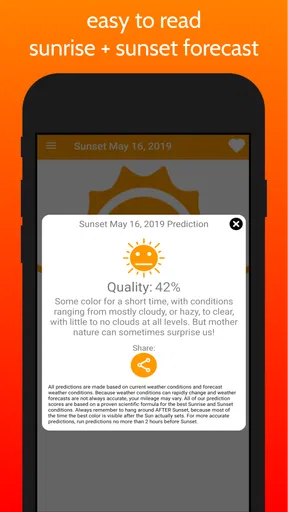
SkyCandy is a sunset-focused weather and photography app designed to help you find the best times and locations for viewing colorful skies. It presents forecast information for sunrise and sunset, including expected cloud conditions, visibility, and the likelihood of vivid colors. The app is especially useful for photographers, travelers, outdoor enthusiasts, and anyone who enjoys planning an evening around a beautiful sunset.
How accurate are SkyCandy’s sunset predictions?
SkyCandy’s predictions are based on weather and atmospheric data, so they can be helpful but should not be treated as a guarantee. Sunset colors depend on changing cloud cover, haze, humidity, air quality, and local conditions that may shift during the day. In my experience, the app works best as a planning tool: check the forecast shortly before going out and compare it with the current sky and local weather.
Does SkyCandy show sunset times and locations near me?
Yes, the app is intended to provide sunset information for your selected location and can be useful for discovering promising viewing spots. Depending on the device and version, you may need to allow location access or manually search for a city or place. Reviewing the map or location details before heading out is recommended, particularly when you are traveling or planning to photograph from a specific viewpoint.
Is SkyCandy free to download, and are there in-app purchases?
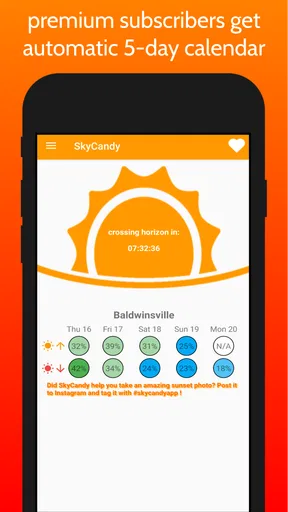
SkyCandy’s availability, pricing, advertisements, and premium features may vary between Android and iOS and can change with future updates. The basic experience may be available at no cost, while additional forecasts, location tools, alerts, or other features could require a subscription or one-time purchase. Before downloading, check the current store listing for the exact pricing, trial terms, and renewal conditions.
Does SkyCandy require an internet connection or access to my location?
An internet connection is generally needed to download updated weather and sunset forecast data. Location permission can make the app more convenient by automatically showing conditions for your current area, but you may be able to enter a location manually if you prefer not to share your position. Keep in mind that forecasts may become outdated when the app cannot connect to its data sources.


